

FBI website compromised to send out fake emails — this is bad
FBI website compromised to send out fake emails — this is bad
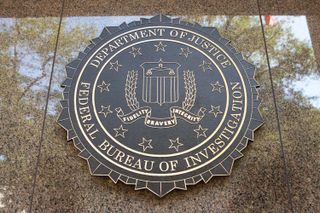
This past weekend, someone managed to transport thousands of fake emails from a real FBI post server warning of a cyberattack — and they announced to have done it without needing to hack anything.
Instead, the miscreant claimed in an conversation with independent security researcher Brian Krebs, all it took was legitimately changing a couple of items in the source code of the web folio where you could apply to sign up for the FBI'S Law Enforcement Enterprise Portal (LEEP) informational service. The FBI is blaming this incident on a "software misconfiguration."
In that location's nothing you need to practise to avoid this phony message, as the FBI has taken the LEEP sign-upward page offline while it fixes the problem. But the incident shows how a poorly set-up website tin can allow anyone with a basic knowledge of web functions to create a convincing online scare.
The scary threat is coming from inside the server
"Our intelligence monitoring indicates exfiltration of several of your virtualized clusters in a sophisticated concatenation attack," read the phony warning sent from an FBI mail server, which sounds scary but is actually just a bunch of cybersecurity buzzwords strung together nonsensically.
"We tried to blackhole the transit nodes used by this advanced persistent threat actor, however there is a huge adventure he will change his assail with fastflux technologies, which he proxies trough [sic] multiple global accelerators."
The message, legitimately sent from the email address eims@ic.fbi.gov and bearing the subject area line "Urgent: Threat actor in systems", went out in two waves in the evening of Nov. 12 and early morning of Nov. 13, the spam-tracking agency Spamhaus told Bleeping Computer, adding that at least 100,000 mailboxes received the email.
"The FBI is aware of a software misconfiguration that temporarily immune an actor to leverage the Police Enforcement Enterprise Portal (LEEP) to send fake emails," the bureau posted Lord's day (November. 14) on its regular website.
"While the illegitimate email originated from an FBI operated server, that server was dedicated to pushing notifications for LEEP and was not role of the FBI's corporate e-mail service. No actor was able to access or compromise any data or PII [personally identifiable information] on the FBI'south network."
The message also tried to defame well-known security researcher Vinny Troia, claiming that he was behind the phony attacks. Troia has gotten in online tussles with cybercriminals, who in turn merits that he's no more ethical than they are. We don't know plenty most the details to form an stance near these accusations.
Equally the messages were being sent out, someone calling themselves "Pompompurin" contacted Krebs and claimed credit for the scary spam emails. They told Krebs it was all made possible by an incredibly dumb registration process congenital into the LEEP sign-upward page.
"This is a horrible thing to be seeing on any website," Krebs quotes Pompompurin as telling him. "I've seen it a few times before, just never on a authorities website, let lone 1 managed by the FBI."
How the email 'hack' seems to accept worked
As many online services do during the signup process, LEEP sends a test email message to the electronic mail address you registered with, including a underground code.
That'southward to confirm that you really are signing upwards for the service and aren't just some naughty kid signing you upwards for unwanted emails. The underground code is something you requite to the operator at an FBI telephone number you telephone call to stop the signup procedure.
So far, so expert. Here'south what seems to be the impaired role: Accoriding to Pompompurin, the LEEP signup page generates that confirmation email message and secret code ON YOUR Auto, using your browser.
Your browser so uses the Mail command to send the bulletin information, forth with all the personal details you've only filled in, back to the FBI website. The web server passes along the details of the confirmation email message to the FBI's mail server, which in turn sends the message to your email address.
But, said Pompompurin, yous tin view the LEEP signup page's source code (Control+U in Chrome), including the e-mail message your browser has generated and the POST commands your browser uses to send the bulletin to the FBI'due south server.
Yous tin and then use the browser's own tools (Control-Shift-I in Chrome) to change the contents of the e-mail message, or even change who receives the bulletin, before it's sent to the FBI'southward mail service server.
This is considering when you're looking at a spider web page, you lot're not viewing a file on a far-off server. Instead, you're looking at a file the furthermost server sent to your auto, which put the file in your browser enshroud. The browser opens the file in the browser cache and presents its contents to y'all.
Because the file is already on your car, you can alter the file and view the results of your changes in your browser. Just the changes you make aren't ordinarily supposed to be sent back to the far-off server that sent you lot the original file in the get-go place. Unfortunately, the mode the LEEP sign-upwardly page was structured let you lot do exactly that.
"Basically, when you requested the confirmation code [it] was generated client-side, then sent to y'all [your email accost] via a POST request," Pompompurin told Krebs. "This Mail asking includes the parameters for the email field of study and body content."
This sounds complicated, but it'southward non, and information technology's not a hack. At that place was no password cracking or software alteration involved. Pompompurin did exactly what the FBI's LEEP signup page was apparently designed to practise.
Information technology'south but that whoever designed the system never stopped to think that someone might have a look at the page's source code and use built-in browser tools to edit the contents and recipients of the message.
"Hackers didn'thack into the server — theytricked the server," wrote security proficient Rob Graham in a blog mail service about this incident November. 14. "They [i.e., Pompompurin] didn't break into the server. Any data on the server is still safe. Hackers but caused business relationship creation requests with customized data."
Pompompurin used a client-side script to automate sending emails to those thousands of recipients, although it's not clear whether they harvested the email addresses or somehow tapped into a database of everyone who had signed upwardly for LEEP emails.
"I could've m% used this to send more than legit-looking emails, trick companies into handing over information etc.," Pompompurin told Krebs.
Now, when you click through on the LEEP website to apply for an account, you only get a warning message that "in that location was a problem processing your request" and are given a telephone number to call.

Source: https://www.tomsguide.com/news/fbi-email-hijack
Posted by: randallextelown67.blogspot.com
0 Response to "FBI website compromised to send out fake emails — this is bad"
Post a Comment